Nursery Bedding Guide
A Practical Guide to Naturepedic Crib Sheet Fit and Fabric
A crib sheet may seem like a simple nursery essential, but its dimensions, pocket depth, elastic, and fabric all matter. A good fit starts with the mattress—not the label—and everyday care should follow the sheet’s own instructions. Here’s how to assess the Naturepedic Organic Sateen Crib Sheet and make a more confident choice for your baby’s sleep space.
Why crib sheet fit deserves a closer look
In a nursery, bedding is not just a finishing touch. A fitted sheet covers the mattress and creates the surface directly beneath a baby. It should be sized for that particular mattress, lie smooth, and remain in place rather than bunching or lifting at the corners. Fit is therefore a practical check, not simply a matter of appearance.
Crib mattresses can differ in length, width, and thickness, and not every mattress described as “standard” has precisely the same dimensions. A sheet that seems close may still pull away if it is too small, or gather into folds if it is too large. The safest starting point is to consult the mattress label or manufacturer’s specifications, then compare those measurements with the sheet’s listed dimensions.
The Naturepedic Organic Sateen Crib Sheet is listed for a standard crib mattress at approximately 27.5 by 52 inches, with a 6-inch depth. The product information also gives separate dimensions for two oval sheet versions: approximately 27 by 47 by 3 inches for V2, and 27.5 by 53.7 by 3 inches for V3. These figures are not interchangeable. Check which mattress shape and size you have before selecting a sheet.
Those measurements are a useful reference, but they do not replace checking the mattress itself. If the mattress has a label or manual, use that as the first source of dimensions. Confirm its length and width, then measure its height from the bottom surface to the top. If the mattress includes a removable cover or another fitted layer, follow the mattress maker’s instructions about whether that layer should remain in place during measurement.
How to measure a crib mattress
A quick, careful measurement can help prevent the familiar frustration of a sheet that looks right in the package but will not sit correctly on the bed. Use a flexible tape measure and place the mattress on a flat surface. Measure from one end to the other, then from side to side. For depth, measure vertically from the bottom edge to the top surface without compressing the mattress.
Take each measurement more than once, especially if the mattress has rounded corners. Record the results in inches or centimetres and keep the units consistent when comparing them with the sheet specifications. A difference caused by switching units or rounding can create confusion, so do not rely on a remembered estimate or a size name alone.
- Length: Measure across the longest side of the mattress.
- Width: Measure across the shorter side, from edge to edge.
- Depth: Measure the full mattress thickness, including any permanent cover.
- Shape: Note whether the mattress is rectangular or oval, and identify any model or version information.
After matching the numbers, put the sheet on the mattress and check the whole surface. The fabric should lie flat, with corners fully tucked and elastic positioned beneath the mattress edge. Look for stretched seams, corners that keep slipping off, or fabric that forms pronounced ridges. A sheet that is difficult to pull over the mattress may be too small or not designed for that mattress depth; one that sags or gathers may be too large or a poor shape match.
Do not try to solve a persistent sizing mismatch by forcing the sheet into place or adding clips, straps, or improvised fasteners in the crib. If it does not fit securely as intended, recheck the mattress and sheet specifications and choose a correctly matched option. A smooth, secure fit matters more than making a mismatched sheet work.
What full-perimeter elastic does
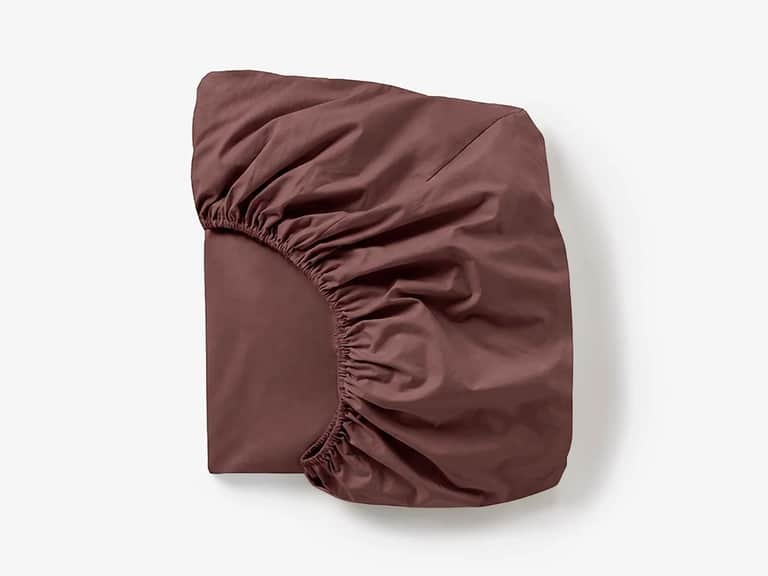
The Naturepedic Organic Sateen Crib Sheet is described as having elastic around its entire perimeter. In practical terms, elastic runs around the sheet’s edge rather than appearing only at isolated corner sections. When the sheet is correctly sized, this construction is designed to help hold the fabric around the mattress and keep the sleeping surface smooth.
Elastic is only one part of the fit. It cannot compensate for a sheet that is the wrong length, width, depth, or shape. The mattress dimensions and the sheet’s cut still need to correspond. Likewise, elastic that looks intact does not guarantee a good fit if the fabric has stretched, the stitching has weakened, or the mattress differs from the one the sheet was made to cover.
When making the bed, place the sheet’s corners over the corresponding mattress corners without twisting the fabric. Work around the mattress, making sure the elastic edge is fully beneath the perimeter and that the sheet is not caught on a mattress cover or other bedding layer. Once it is on, run a hand over the surface to check for folds. Recheck the edges periodically during routine sheet changes and laundering.
Over time, repeated washing and drying can affect textiles, including elastic. If a sheet begins to loosen, pop off at a corner, or develop a persistent sag, inspect its elastic and seams and compare its measurements with the mattress again. Normal fabric wear can change how a once-reliable sheet behaves, so the first fit check is not necessarily the last.
Understanding cotton sateen
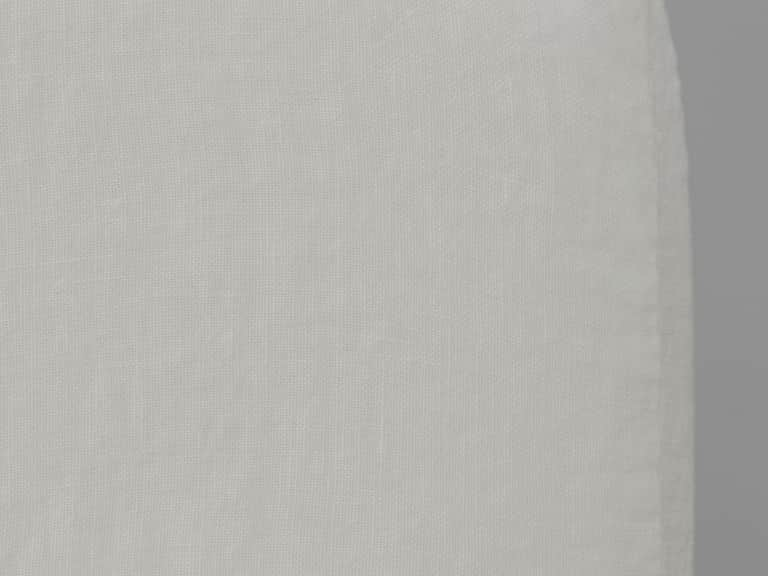
“Sateen” describes a weave, not a separate plant fibre. In this case, the sheet is described as 100% GOTS-certified organic cotton with a 300-thread-count sateen construction. Cotton is the fibre; sateen is the way the yarns are arranged during weaving. That construction gives the surface a smooth hand and a soft, slightly lustrous appearance compared with the more matte, crisp look often associated with a plain percale weave.
Texture is personal. Some caregivers may prefer sateen’s smoother feel, while others may favour a crisper or more textured fabric. Weave can influence how a sheet feels and drapes, but it cannot tell you on its own whether the sheet will fit a particular mattress. Dimensions, construction, and care instructions remain separate considerations.
Thread count describes the number of threads in a measured area of fabric, but it is not a complete measure of comfort or durability. Fibre quality, yarn construction, finishing, and the weave all contribute to the finished textile. A higher thread count does not automatically mean a sheet is the better choice for every family, and it does not establish mattress compatibility. For a crib sheet, accurate sizing and secure construction are especially important practical checks.
The product description presents the sheet as breathable and gentle in feel. Those are descriptions of the fabric’s qualities, not a promise that a sheet will prevent overheating, allergies, or any health concern. A baby’s sleep environment should be arranged according to current safe-sleep guidance from trusted public-health authorities, alongside the mattress and product manufacturers’ directions.
What organic certification can—and cannot—tell you
The product information identifies the cotton as GOTS-certified organic. A certification is most useful when understood as a defined standard, rather than a blanket promise about every aspect of a product. The Global Organic Textile Standard (GOTS) sets criteria for organic fibres and aspects of textile processing, with requirements that apply across relevant stages of the supply chain. For the exact scope of a claim, caregivers can look for the certification details supplied by the maker or certification directory.
Organic sourcing may be important to families comparing materials and production standards. Still, the word “organic” does not tell you the sheet’s dimensions, prove that it will fit your mattress, or replace a review of its care label. Nor does a textile certification by itself establish that a product is appropriate for every sleep setup. Fit, construction, instructions, and safe-use guidance should all be considered.
For a clear comparison, look at the full product description rather than relying on a single word on packaging. Confirm the fibre content, weave, dimensions, elastic construction, care directions, and the certification claim. If any of those details are missing or unclear, check with the manufacturer before using the sheet.
A practical routine for laundering
Nursery sheets are used frequently, so easy and consistent care matters. The Naturepedic sheet is described as machine washable and dryer-friendly, but the product’s care label should be the final guide for cycle, water temperature, detergent, and drying. Instructions can vary by fabric, finish, and product version, even among sheets made from similar materials.
Before the first wash, check the care label and any instructions included with the sheet. Use a detergent and wash routine suitable for the textile and your household needs. Avoid assuming that every cotton sheet should be washed at the same temperature or dried at the same setting. Excessive heat or an unsuitable cycle can contribute to shrinkage, wear, or changes in elastic over time.
After washing, inspect the sheet before putting it back on the mattress. Check the seams and perimeter elastic, and make sure there are no tears, loose threads, or areas that have become misshapen. Let the sheet dry fully according to its instructions. A clean, dry spare can make changes more manageable when a sheet is being laundered.
If a stain occurs, respond in a way that is compatible with the care label and the fabric. Avoid combining cleaning products or using a treatment without checking whether it is suitable. For persistent stains, consult the manufacturer’s care guidance rather than applying increasingly harsh methods that could weaken the textile or alter its finish.
Safe-sleep considerations come first
A fitted sheet is only one element of a baby’s sleep space. Current safe-sleep guidance generally emphasizes a firm, flat sleep surface with a fitted sheet that matches the mattress. Loose blankets, pillows, stuffed toys, and other soft items should be kept out of an infant’s sleep area in accordance with guidance from trusted health authorities. Always follow current advice from your local public-health service and your child’s healthcare provider.
Do not add extra layers or accessories to compensate for a sheet that does not fit. Avoid using a sheet with torn fabric, damaged elastic, or a corner that will not remain secured. The mattress itself should also be used according to its manufacturer’s instructions; do not alter it or add unapproved padding to change its dimensions or feel.
Nursery bedding can look inviting without adding loose items to the crib. Keep decorative layers outside the infant sleep space, and use the fitted sheet specified for the mattress. If you have a question about a particular mattress, crib, or sheet, the manufacturer can clarify compatibility; for medical or safe-sleep questions, seek guidance from an appropriate health professional or public-health source.
Common fit problems and what to check
A sheet that comes loose is not necessarily a sign that the elastic has failed. First verify that the sheet is intended for the mattress’s shape and measurements. Then inspect the depth: a sheet designed for a shallower or deeper mattress may not anchor as expected. Check that the mattress has not changed because a different cover or pad has been added, and make sure the sheet is not twisted or caught as it is placed.
If the sheet seems too tight, stop rather than pulling forcefully on its corners. Compare the listed measurements with the mattress, including its depth, and check whether you have a standard crib sheet or an oval version. If it is too loose, check for a size or shape mismatch and inspect the elastic for stretching. Do not rely on a product’s general size name alone; dimensions offer a more useful comparison.
Fabric can also change after laundering. If a sheet once fit well but now feels difficult to apply, has shortened, or no longer sits flat, review the care instructions and inspect for signs of wear. A damaged or persistently ill-fitting sheet should be replaced with one made for the mattress rather than adjusted with an improvised solution.
A caregiver’s quick fit checklist
Before using a crib sheet, a short review can turn a small purchase detail into a useful nursery habit. Keep the mattress model and measurements somewhere accessible, especially if you have more than one crib or mattress in the home.
- Identify the mattress shape and any model or version information.
- Measure the mattress length, width, and depth rather than relying only on a size label.
- Compare all three measurements with the sheet’s specifications and keep units consistent.
- Confirm whether the sheet is intended for a standard rectangular mattress or a specific oval version.
- Fit the sheet without forcing it; check that each corner is seated and the surface lies smooth.
- Follow the care label, then inspect the fabric, seams, and elastic after laundering.
- Use the mattress and sheet as directed, and follow current safe-sleep recommendations.
The bottom line on Naturepedic crib sheet fit
Choosing a crib sheet is easier when the process begins with the mattress. Measure its length, width, and depth; confirm its shape and model; then compare those details with the sheet’s specifications. For the Naturepedic Organic Sateen Crib Sheet, the listed standard crib size is approximately 27.5 by 52 by 6 inches, while separate measurements are provided for two oval versions. Selecting the right version is essential.
Full-perimeter elastic is a helpful construction detail, but it works as intended only when the sheet matches the mattress. The 100% organic cotton sateen fabric offers a smooth hand, and its listed GOTS certification may interest families who consider fibre sourcing and processing standards. Neither fabric feel nor certification replaces a careful fit check or the manufacturer’s care directions.
With a correctly matched sheet, routine inspection, and sensible laundering, caregivers can make this nursery essential simpler to manage. The most reassuring choice is not necessarily the one with the most elaborate description; it is the one whose dimensions, construction, and care instructions make sense for the mattress in front of you.