Bedding fit guide
How Vispring Mattress Height Shapes Bedding Fit
A mattress can look perfectly ordinary until a fitted sheet starts sliding off its corners. With a Vispring mattress, the right bedding choice depends not just on the bed’s width and length, but on its complete height—including any topper or protector. A careful measurement can spare you nightly readjustments and help keep the sleep surface smooth and secure.
Why height matters as much as length and width
When people shop for sheets, they often start with familiar labels such as queen, king, or California king. Those names describe a mattress’s surface dimensions, but they don’t tell you how thick it is. That missing measurement can make the difference between a fitted sheet that hugs the mattress and one that pulls tight, creeps upward, or pops free overnight.
Vispring mattresses are available in different models and constructions, and mattress height can vary accordingly. Even two mattresses with the same nominal length and width may have different depths. The specific model, its construction, and the components placed on top all affect the measurement your fitted bedding needs to accommodate.
That’s why the useful question isn’t only, “What size is my bed?” It’s also, “How deep is the complete surface I’m covering?” A fitted sheet has to pass over the mattress’s top edge, wrap down its sides, and leave enough fabric to tuck beneath it. If that path is longer than the sheet’s usable pocket, the fabric is under strain. If the pocket is much deeper than needed, excess material may bunch or sit loosely around the corners.
Neither problem is a matter of personal preference alone. A snug but not overstretched fit helps the sheet stay in position and gives you a smoother surface to sleep on.
Think beyond the mattress itself
A mattress measurement taken before adding anything on top can be misleading. Mattress toppers, padded protectors, and some other layers increase the total depth that the fitted sheet must cover. A relatively thin layer can still change how a sheet fits, especially when the original sheet was already close to its depth limit.
Measure the bed as it is actually used. If you normally sleep with a topper and a protector in place, include both. If you use a protector but remove the topper seasonally, it can be helpful to check the bed in each configuration. A sheet that fits well in one setup may feel tight in another.
There’s no need to assume that every accessory adds exactly the thickness printed on its label. The way layers compress under their own weight, and the way their edges sit, can affect the final profile. Measuring the assembled bed gives you a more practical answer than adding product descriptions together on paper.
Consider the bedding stack as a complete system: mattress, topper, protector, and fitted sheet. The sheet needs to fit around the stack you have, not a simplified version of it. If you change any component later, recheck the fit rather than assuming the old measurements still apply.
How to measure a Vispring mattress accurately
Use a flexible tape measure and take your time. For a dependable measurement, make the bed up with the layers you want the fitted sheet to cover. Keep the bed on its usual base and avoid pressing down hard on the mattress, since compression can give you a smaller reading than the bedding needs to accommodate.
- Clear the top surface. Remove loose bedding so you can see the mattress edges and any layers that will remain underneath the fitted sheet.
- Add the usual layers. Put on the topper and mattress protector, if you use them. Smooth them into their normal positions.
- Measure the depth. Place the tape at the top surface near one edge and run it vertically down the side to the bottom edge of the layer the fitted sheet must cover. Keep the tape straight and do not pull the mattress inward.
- Check more than one spot. Measure at several points along the sides and, where practical, at different corners. A quilted protector, topper, or mattress shape can make the profile vary slightly.
- Record the largest useful reading. Note the greatest depth you find, along with whether it includes a protector or topper. This avoids choosing bedding that fits only at the thinnest point.
- Confirm length and width too. Measure the top surface from edge to edge. Mattress-size names can vary by market, and checking the actual dimensions helps prevent a mismatch in more than one direction.
Measure down to the mattress base if the sheet is intended to wrap around the mattress alone. If it needs to cover a topper or protector too, measure down to the bottom edge of the full stack. The aim is to capture the full distance the sheet’s pocket must travel—not merely the visible height of the mattress above the bed base.
What “pocket depth” actually means
Pocket depth is the stated depth of the corner or side section designed to pass over a mattress. It’s a useful starting point, but it should not be treated as a guarantee that the sheet will fit every bed with the same number. Manufacturers may describe the measurement in different ways, and a sheet’s elastic construction can influence how it sits in use.
Compare the bedding’s stated pocket depth with the measured height of your complete sleep surface. Then check how much fabric is intended to extend beneath the mattress. A sheet must cover the side and have enough remaining material to hold at the underside. Simply matching the pocket number to the mattress height may leave too little fabric for a secure tuck, particularly if the mattress is deep or the sheet’s cut is close-fitting.
For that reason, look for the manufacturer’s guidance on maximum mattress depth and whether the measurement includes a topper. If that information isn’t clear, ask the bedding supplier to clarify how pocket depth is defined. A little precision here can be more useful than relying on a broad label such as “deep pocket.”
As a general fitting principle, allow enough coverage for the sides and a secure tuck underneath, while avoiding excess that leaves the corners loose. The exact amount depends on the sheet’s construction, elastic placement, fabric, and the mattress profile. The product’s fit guidance should take priority over a generic rule of thumb.
Reading a fitted-sheet size description
When comparing bedding, check the full specifications rather than relying on the product name alone. Look for the mattress size the sheet is designed for, its stated pocket depth or maximum mattress height, and any notes about toppers or protectors. If the listing provides dimensions for the fitted sheet itself, compare them with your measurements and ask the seller how those dimensions relate to the finished pocket.
Some bedding descriptions give a single pocket-depth figure; others specify a range or a maximum mattress thickness. These details are not interchangeable. A maximum depth tells you the largest stated profile the sheet is intended to cover, while a pocket dimension may describe a particular part of the fabric. When the language is unclear, getting a direct explanation is better than guessing.
Also check whether the sheet is sold individually or as part of a set. Sets may include a fitted sheet with different dimensions from the flat sheet and pillowcases, and the fitted-sheet details can be easy to overlook in a long product description. Focus on the piece that actually needs to fit the mattress.
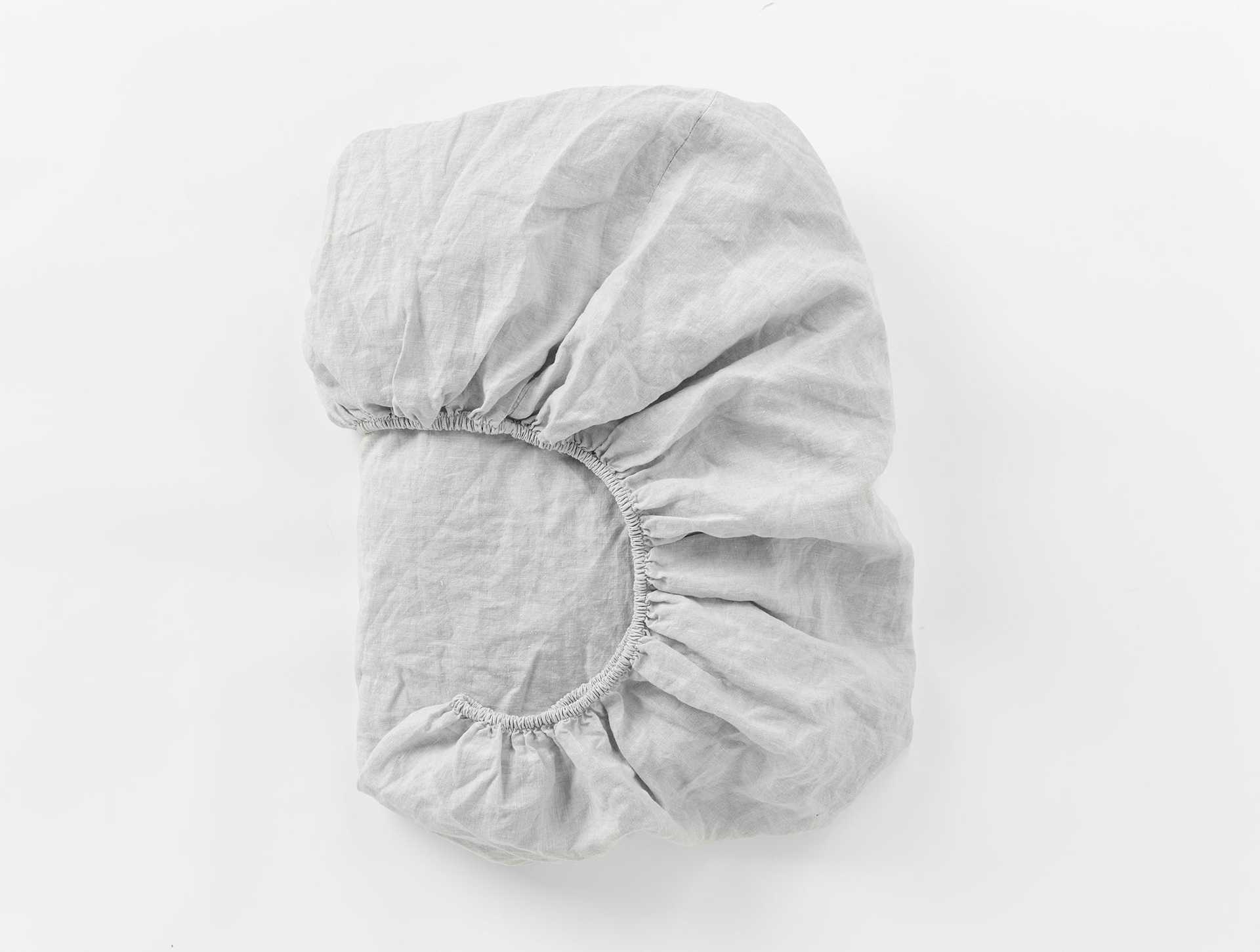
As one example of the kind of specification shoppers may encounter, the Organic Relaxed Linen Fitted Sheet is described with a 15-inch deep pocket and full elastic. That figure is a product detail, not a universal standard or a guarantee of compatibility with every mattress measuring 15 inches deep. Always check the sheet’s own fit guidance against the complete height of your bed.
Signs the sheet is too shallow—or too deep
A sheet that is too shallow often announces itself quickly. You may find that the corners are difficult to pull over the mattress, the seams feel stretched, or the fabric lifts as soon as you move. If one corner repeatedly slips off, the cause could be a mismatch between the pocket and the bed’s total depth, even when the mattress’s width and length are correct.
Visible strain is another clue. Check whether the fitted-sheet seam sits tightly across a corner or whether the fabric looks pulled down toward the underside. Persistent tension can make the bed harder to make and may place unnecessary stress on the sheet’s seams and elastic. Forcing a shallow sheet into place is unlikely to make it more secure.
A pocket that is much deeper than the mattress stack can cause a different set of frustrations. Fabric may droop, gather beneath the mattress, or form loose folds around the corners. The sheet may still stay on, but excess material can make the surface less tidy and more likely to shift. A deeper pocket is not automatically a better fit; the goal is compatibility.
Before replacing a sheet, check the basics: confirm that the correct mattress size is being used, make sure each corner is positioned properly, and check whether a topper or protector has been added. If those details are right and the sheet still strains or hangs loosely, its pocket depth may not be suitable for the assembled bed.
Why elastic and fabric matter, too
Pocket depth is central, but it isn’t the whole story. Fitted sheets use different elastic arrangements and fabric constructions. Elastic may run all the way around the edge or be concentrated in the corners. Either approach can help hold the sheet in place, but the finished fit depends on how the elastic, cut, and depth work together.
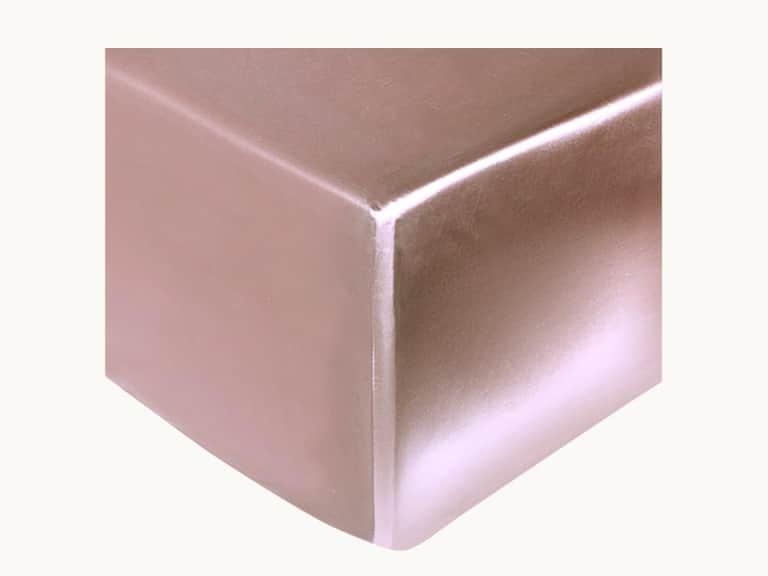
Fabric can also affect how a sheet behaves. Cotton percale is commonly described as crisp, while sateen often has a smoother feel and a different drape. Linen has a textured, relaxed character, and silk requires especially careful handling. These differences influence feel and care, but they do not remove the need to match the sheet’s dimensions to the mattress.
Do not assume that a particular weave will solve a fit problem. A soft or stretchy-feeling sheet can still be too shallow, and a structured fabric can still fit securely when its dimensions are appropriate. Treat material choice and fit as separate decisions: first confirm the required size and depth, then choose the feel and care routine that suit you.
Take care with laundering instructions as well. High heat and unsuitable washing can affect a fabric’s condition and shape over time. Following the care label helps preserve the sheet you have, though it cannot compensate for a pocket that was too small from the start.
A practical checklist before you choose bedding
When shopping for fitted bedding for a Vispring mattress, keep a short record of the bed’s dimensions. A note on your phone can prevent a familiar mistake: remembering the bed size but forgetting its depth or the layers sitting on top.
- Write down the mattress’s length and width as measured, not just its size label.
- Record the complete height with the topper and protector you normally use.
- Note whether you measured to the mattress edge or to the bottom of the full bedding stack.
- Check the specific Vispring model’s current dimensions with the manufacturer or retailer if you need confirmation.
- Compare your measurements with the fitted sheet’s stated pocket depth and maximum mattress height.
- Check whether the sheet’s guidance includes a topper or protector.
- Ask how the stated pocket-depth figure is defined if the product description is ambiguous.
- Review the return or exchange policy before purchasing if fit remains uncertain.
That last point matters because product labels can be broad, and real-world mattress setups differ. A supplier who can explain the intended measurement may help you make a more confident choice than a size chart alone.
What to do when the mattress setup changes
A fitted sheet that works today may not fit the same way after a change to the bed. Adding a thicker protector or a topper can use up some of the sheet’s spare depth. Replacing a thin layer with a more substantial one can be enough to make the corners difficult to secure.
The reverse can happen, too. If you remove a topper, a sheet selected for the deeper setup may have extra fabric. It may still be usable, but check whether the corners remain secure and the surface stays smooth. If the sheet shifts or gathers, reassess the fit rather than compensating by pulling one corner tighter than the others.
When you are unsure, repeat the measurement after the new layer is in place. The mattress model may not have changed, but the height the fitted sheet needs to cover has. Keep the earlier measurement for reference, label it clearly, and record the updated figure alongside it.
A note on nursery bedding and safety
For a crib or another infant sleep space, sheet fit is especially important. Use bedding designed for the specific mattress, check that it lies securely, and follow current safe-sleep guidance from recognized health authorities. Do not use a deep-pocket adult sheet as a substitute for a properly sized crib sheet. Loose fabric and unsuitable bedding can create safety concerns.
Measure the crib mattress according to the bedding maker’s instructions and check the fit whenever the sheet is changed. Infant sleep recommendations can differ from adult bedding practices, so caregivers should consult up-to-date guidance rather than assuming that general mattress-fitting advice applies to a crib.
The takeaway: measure the bed you actually sleep on
Vispring mattress height can vary with model and construction, so there is no single pocket-depth number that should be assumed to fit every bed. The reliable route is straightforward: confirm the mattress’s dimensions, measure its complete height with the usual topper and protector in place, and compare that result with the fitted sheet’s stated specifications.
Give particular attention to how the pocket-depth figure is defined and whether the sheet has enough fabric to wrap around the sides and tuck beneath the mattress. A secure fit should feel comfortably anchored—not stretched to its limit and not left with loose, gathering fabric. If the product details do not make the answer clear, ask the manufacturer or seller before choosing.
A few minutes with a tape measure can turn a frustrating bedding guess into a practical decision. The result is a fitted layer that stays where it belongs, helps keep the surface smooth, and suits the complete sleep setup rather than just the mattress label.